by Gayane Abgaryan
March. 23rd, 2026
by Gayane Abgaryan
March. 23rd, 2026
THE WEIGHT OF LIGHT
Studio Visit and Q&A with Renato D'Agostin
The Weight of Light
Studio visit and Q&A with Renato D'Agostin
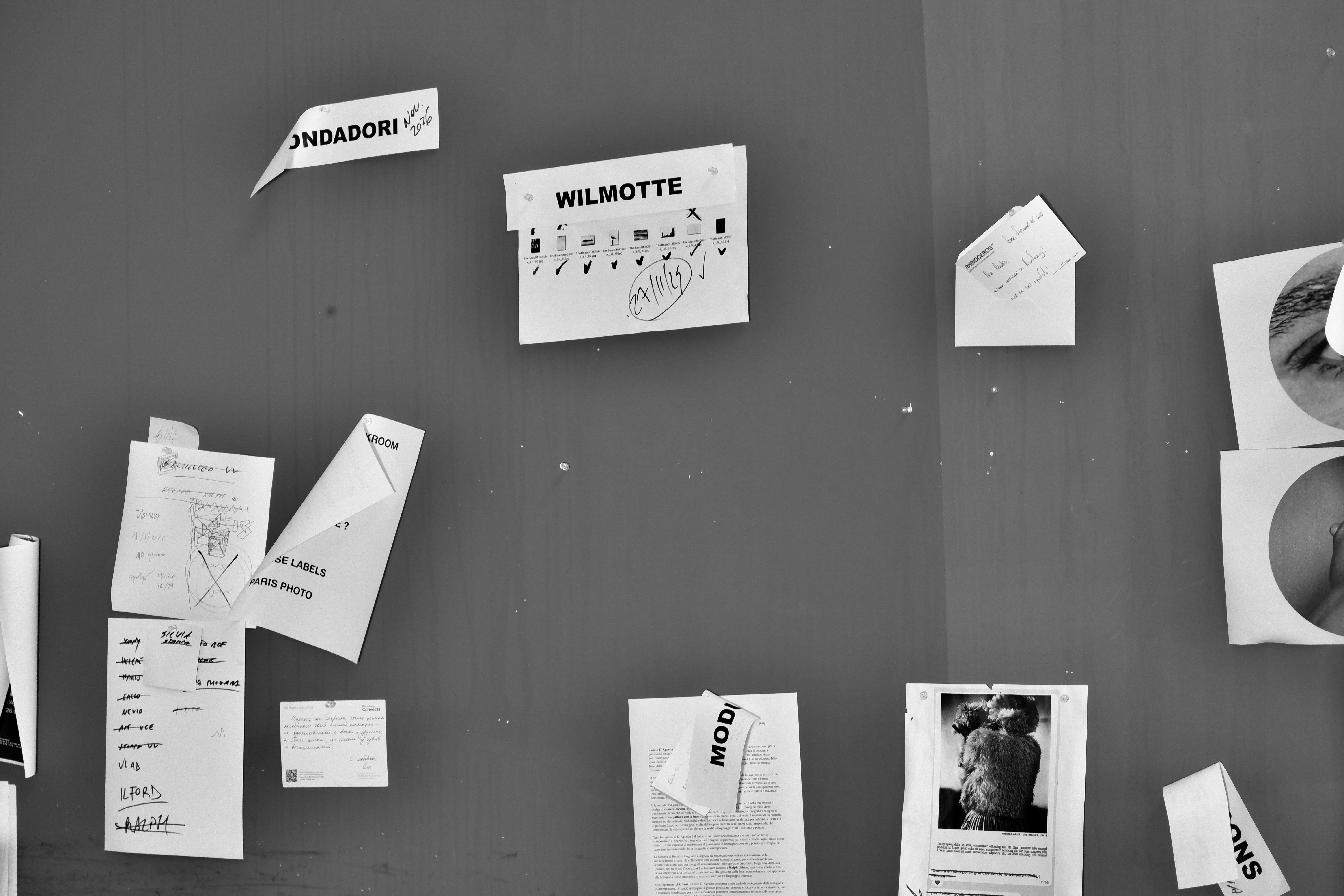
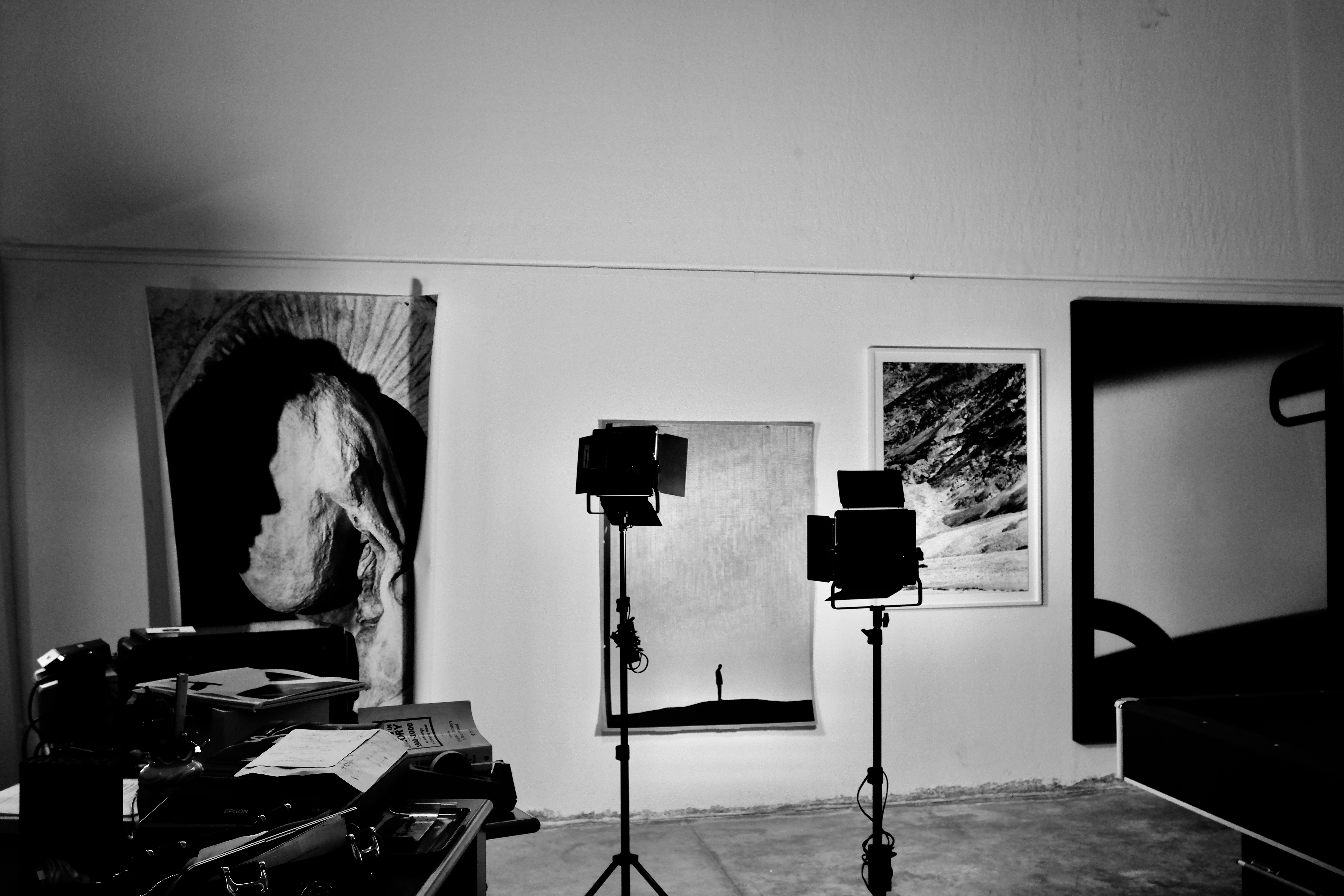
Not too far from the lagoon, in the hushed, industrial outskirts of Venice, a concrete-clad warehouse looms. Nothing hints that beyond its doors is the studio of Renato D’Agostin. Sunlight filters through the small, high-set windows, grazes the photographs that ornament the bleached walls—works that span more than twenty years of the artist’s career. Plans of future exhibitions, shelves stacked with books on books from Tokyo to Venice, a parade of his motorcycles resting in the corner; yet the work happens at the rear of the studio: the darkroom.
“The weight of light,” D’Agostin calls it. Here, with the help of massive, custom-built machinery of his own design, he illuminates some things while leaving others suspended in a pitch-black void, sculpting the photographs. “In the darkroom, you can reshape reality through light,” he says. With measured movements of his hands, he puppeteers the light through invisible strings. D’Agostin burns the image in precise spots to create the stark contrasts of black and white.
Renato D’Agostin defines his work through a paradox: the intimate distance. Though not his own selection, the eight photographs of the Le Flou de Venise exhibition at Fondazione Wilmotte showcase the intimacy of being so close to the subjects, yet something – the angle or the haze – guards them, keeping them from being recognizable.
Why those eight images specifically?
R: It was a selection made with Wilmotte. He wanted to convey a certain idea. His program focuses on old-school black-and-white photography. Wilmotte asked me to do this project, but I had another idea in mind.
So what did Wilmotte want exactly?
R: He wanted to recreate a foggy, hazy, distant, yet intimate perception of Venice, where the grain doesn’t just evoke melancholy but also a suspended reality – a feeling you mostly get during winter, or during foggy days like today.Most of these photos, however, were taken in summer. I faked most of the effects to make it feel like winter.
Even the book cover?
R: Yes, the cover was shot in August. I created the fog effect by photographing the handrail of the marble Ponte degli Scalzi in front of the train station. If I print it darker in the darkroom, you can see the horizon line. In winter, with real fog, the gondolier would have a huge jacket. In my photographs, I prefer timeless fashion – I wouldn’t even want sneakers in them.
What was the technique itself?
R: I stoop in front of the handrail and put the marble out of focus, making it suspended and evaporating through the light. In another one for example, I shot it with a glass of spritz in summer. If I print it darker, you’ll see the line of the glass, but I wanted San Giorgio in focus, the hat in focus —everything working toward the idea of memory.
And the darkroom mechanics, how did you build those?
R: I have always been this way. When I was little, if my parents gifted me a toy car, they knew I would take out the engine and build something else.
What about the “fish” photo?
R: That was one of those photographs were when I first saw it printed, I hated it. But Wilmotte looked at it and said, “Let’s do this.” You never know what will impact people. That’s what I try to achieve in my photography: universality. It’s always very intimate, very personal. That photo ended up being one of the most successful in the show. As you can see some fish are closer, some further…
How was the mirror photo executed?
R: It reflects a square outside a bar, showing how the darkroom changes reality. The black didn’t exist — there were chairs there instead. You rebuild reality to show that reality is one thing and perception is another. The book was published in 2012, but the selection was made last year. If Wilmotte has a vision, I want to follow it. He’s one of the top architects in the world. He wanted to convey a dream that’s actually real, something you could see if you step outside on a foggy day. That’s how I define my work: intimate distance.
Intimate distance? Do you mean a closer look at the subject, or the effect of the blur?
R: It depends on the exhibition. In that case, it was because of the blur. But generally, my work is defined by intimate distance. It is very rare to recognize a human subject, I try to keep it as a shape, a man or a woman won’t be recognizable as I hope the viewers will put whoever’s face or emotion in that shape. I want my work to be universal, open for interpretation rather thatn dictating a specific subject or moment in time. I tend to keep myself far from the subject, but somehow intimately close. If you remove specific identity from the photograph, viewers can project even themselves into the image.
Returning to your roots – what did that mean for you?
R: It was a necessity. In New York, I had a project, and I realized I wanted to print bigger. I had no limits, so that same night I booked a flight and moved into my studio in the outskirts of Venice because I needed more space. Back in Venice, I started getting a lot of attention, and everything happened at the same time. I began working with Paris a lot as well.
Did you feel detached from Venice when you returned?
R: In 2007, I went to Tokyo for Tokyo Untitled. It was very successful. After the cultural shock of Japan, I wanted to do something familiar, so I went from New York to Venice. I felt like a tourist, since I’m not completely from Venice. But it was more familiar than if a New Yorker arrived. When I really came back, it was different. Venice has always been a passage for all cultures. You can either get adopted, or you must adapt to it. I always feel at home there.
Do you care about perfection in your work?
R: I don’t care about perfection in a conventional sense, as long as the work meets my own standards - which are very high. Earlier in my career I would correct every small imperfection in the darkroom. Now I sometimes leave those marks in the final print because they are part of the image’s life. My work is very personal - I make photographs first for myself. But when someone else sees themselves in the image, that’s when it becomes universal. One student told me his favorite image looked like a man jumping off the Berlin Wall. For him it represented freedom. That interpretation had never crossed my mind when I took the photograph. But it showed me how viewers bring their own stories to an image. I never thought about it that way. I need to accept my photography universally — it comes from me first, and then others can situate themselves in it. When I took that photograph, I saw myself. It made sense to me personally, and that’s the only way I could have taken it
How do you keep that balance between perfectionism and letting the work breathe?
R: I never think about the audience when I’m making photographs. If I did, I would probably end up doing commercial photography. What matters to me is honesty - being completely true to my own vision. Of course it’s wonderful when people connect with the work, but the photograph has to make sense to me first.
What’s more important, space or people?
R: For me, the most important element is not space or people - it’s my perspective. I am the common denominator between the subject and the place. Everything ultimately comes from the way I see the world.
Not too far from the lagoon, in the hushed, industrial outskirts of Venice, a concrete-clad warehouse looms. Nothing hints that beyond its doors is the studio of Renato D’Agostin. Sunlight filters through the small, high-set windows, grazes the photographs that ornament the bleached walls—works that span more than twenty years of the artist’s career. Plans of future exhibitions, shelves stacked with books on books from Tokyo to Venice, a parade of his motorcycles resting in the corner; yet the work happens at the rear of the studio: the darkroom.
“The weight of light,” D’Agostin calls it. Here, with the help of massive, custom-built machinery of his own design, he illuminates some things while leaving others suspended in a pitch-black void, sculpting the photographs. “In the darkroom, you can reshape reality through light,” he says. With measured movements of his hands, he puppeteers the light through invisible strings. D’Agostin burns the image in precise spots to create the stark contrasts of black and white.
Renato D’Agostin defines his work through a paradox: the intimate distance. The eight photographs of the Le Flou de Venise exhibition at Fondazione Wilmotte showcase the intimacy of being so close to the subjects, yet something – the angle or the haze – guards them, keeping them from being recognizable.
Why those eight images specifically?
R: It was a selection made with Wilmotte. He wanted to convey a certain idea. His program focuses on old-school black-and-white photography. Wilmotte asked me to do this project, but I had another idea in mind.
So what did Wilmotte want exactly?
R: He wanted to recreate a foggy, hazy, distant, yet intimate perception of Venice, where the grain doesn’t just evoke melancholy but also a suspended reality – a feeling you mostly get during winter, or during foggy days like today.Most of these photos, however, were taken in summer. I faked most of the effects to make it feel like winter.
Even the book cover?
R: Yes, the cover was shot in August. I created the fog effect by photographing the handrail of the marble Ponte degli Scalzi in front of the train station. If I print it darker in the darkroom, you can see the horizon line. In winter, with real fog, the gondolier would have a huge jacket. In my photographs, I prefer timeless fashion – I wouldn’t even want sneakers in them.
What was the technique itself?
R: I stood in front of the handrail and put the marble out of focus, making it suspended and evaporating through the light. In another one for example, I shot it with a glass of spritz in summer. If I print it darker, you’ll see the line of the glass, but I wanted San Giorgio in focus, the hat in focus —everything working toward the idea of memory.
And the darkroom mechanics, how did you build those?
R: I have always been this way. When I was little, if my parents gifted me a toy car, they knew I would take out the engine and build something else.
What about the “fish” photo?
R: That was one of those photographs were when I first saw it printed, I hated it. But Wilmotte looked at it and said, “Let’s do this.” You never know what will impact people. That’s what I try to achieve in my photography: universality. It’s always very intimate, very personal. That photo ended up being one of the most successful in the show. As you can see some fish are closer, some further…
How was the mirror photo executed?
R: It reflects a square outside a bar, showing how the darkroom changes reality. The black didn’t exist — there were chairs there instead. You rebuild reality to show that reality is one thing and perception is another. The book was published in 2012, but the selection was made last year. If Wilmotte has a vision, I want to follow it. He’s one of the top architects in the world. He wanted to convey a dream that’s actually real, something you could see if you step outside on a foggy day. That’s how I define my work: intimate distance.
Intimate distance? Do you mean a closer look at the subject, or the effect of the blur?
R: It depends on the exhibition. In that case, it was because of the blur. But generally, my work is defined by intimate distance. It is very rare to recognize a human subject, I try to keep it as a shape, a man or a woman won’t be recognizable as I hope the viewers will put whoever’s face or emotion in that shape. I want my work to be universal, open for interpretation rather thatn dictating a specific subject or moment in time. I tend to keep myself far from the subject, but somehow intimately close. If you remove specific identity from the photograph, viewers can project even themselves into the image.
Returning to your roots – what did that mean for you?
R: It was a necessity. In New York, I had a project, and I realized I wanted to print bigger. I had no limits, so that same night I booked a flight and moved into my studio in the outskirts of Venice because I needed more space. Back in Venice, I started getting a lot of attention, and everything happened at the same time. I began working with Paris a lot as well.
Did you feel detached from Venice when you returned?
R: In 2007, I went to Tokyo for Tokyo Untitled. It was very successful. After the cultural shock of Japan, I wanted to do something familiar, so I went from New York to Venice. I felt like a tourist, since I’m not completely from Venice. But it was more familiar than if a New Yorker arrived. When I really came back, it was different. Venice has always been a passage for all cultures. You can either get adopted, or you must adapt to it. I always feel at home there.
Do you care about perfection in your work?
R: I don’t care about perfection in a conventional sense, as long as the work meets my own standards - which are very high. Earlier in my career I would correct every small imperfection in the darkroom. Now I sometimes leave those marks in the final print because they are part of the image’s life. My work is very personal - I make photographs first for myself. But when someone else sees themselves in the image, that’s when it becomes universal. One student told me his favorite image looked like a man jumping off the Berlin Wall. For him it represented freedom. That interpretation had never crossed my mind when I took the photograph. But it showed me how viewers bring their own stories to an image. I never thought about it that way. I need to accept my photography universally — it comes from me first, and then others can situate themselves in it. When I took that photograph, I saw myself. It made sense to me personally, and that’s the only way I could have taken it
How do you keep that balance between perfectionism and letting the work breathe?
R: I never think about the audience when I’m making photographs. If I did, I would probably end up doing commercial photography. What matters to me is honesty - being completely true to my own vision. Of course it’s wonderful when people connect with the work, but the photograph has to make sense to me first.
What’s more important, space or people?
R: For me, the most important element is not space or people - it’s my perspective. I am the common denominator between the subject and the place. Everything ultimately comes from the way I see the world.
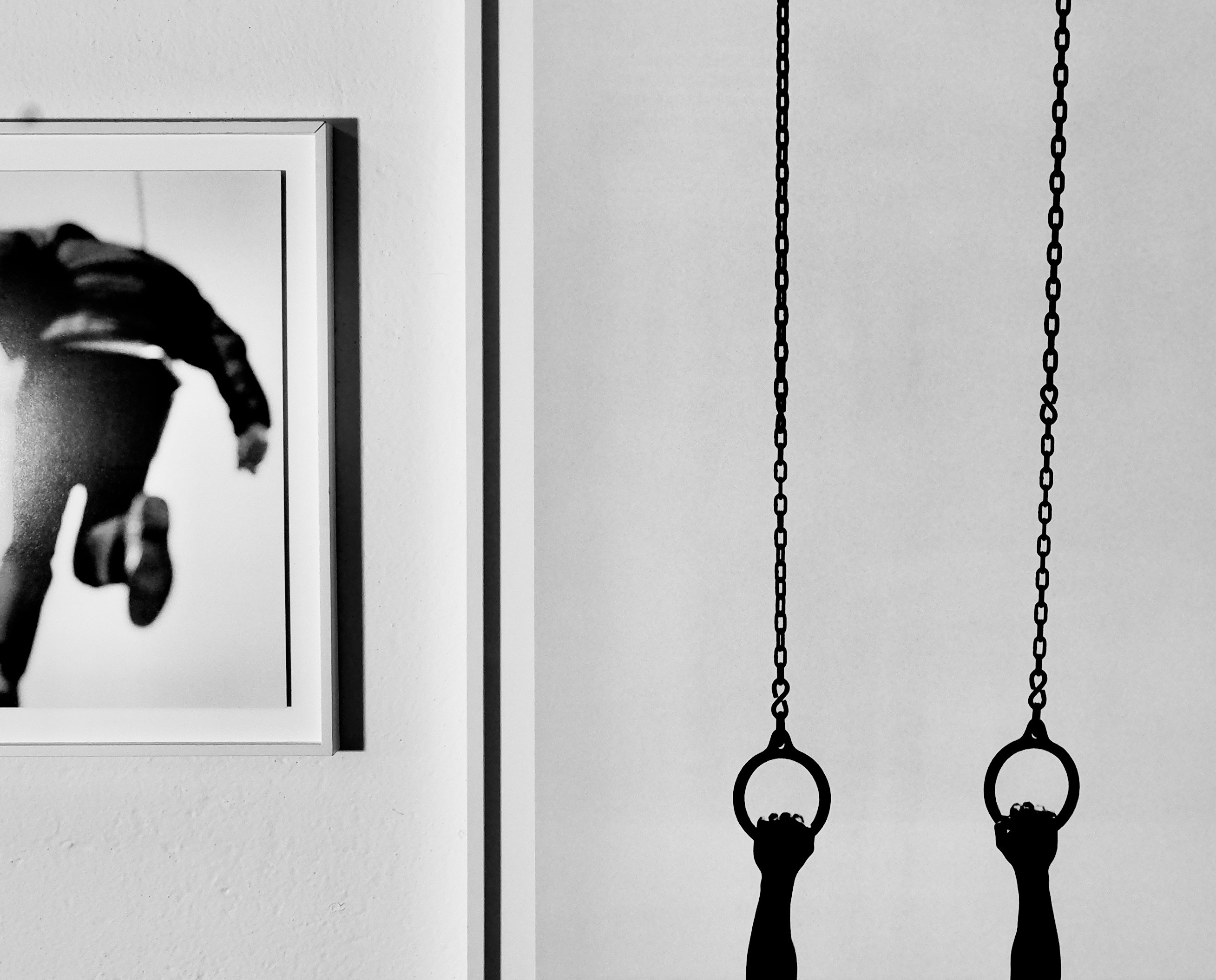
Photograph by Gayane Abgaryan, courtesy of Renato D’Agostin
Photograph by Gayane Abgaryan, courtesy of Renato D’Agostin
Photograph by Gayane Abgaryan, courtesy of Renato D’Agostin
Photograph by Gayane Abgaryan, courtesy of Renato D’Agostin
Photograph by Gayane Abgaryan, courtesy of Renato D’Agostin
Photograph by Gayane Abgaryan, courtesy of Renato D’Agostin
© 2026 Acnarou. All rights reserved.
© 2026 Acnarou. All rights reserved.