"You Either Get Adopted or Adapt to it"
Le flou de Venise from an outsider's perspective
by Gayane Abgaryan
March. 23rd, 2026
by Gayane Abgaryan
March. 23rd, 2026
"You Either Get Adopted or Adapt to it"
Le flou de Venise from an outsider's perspective
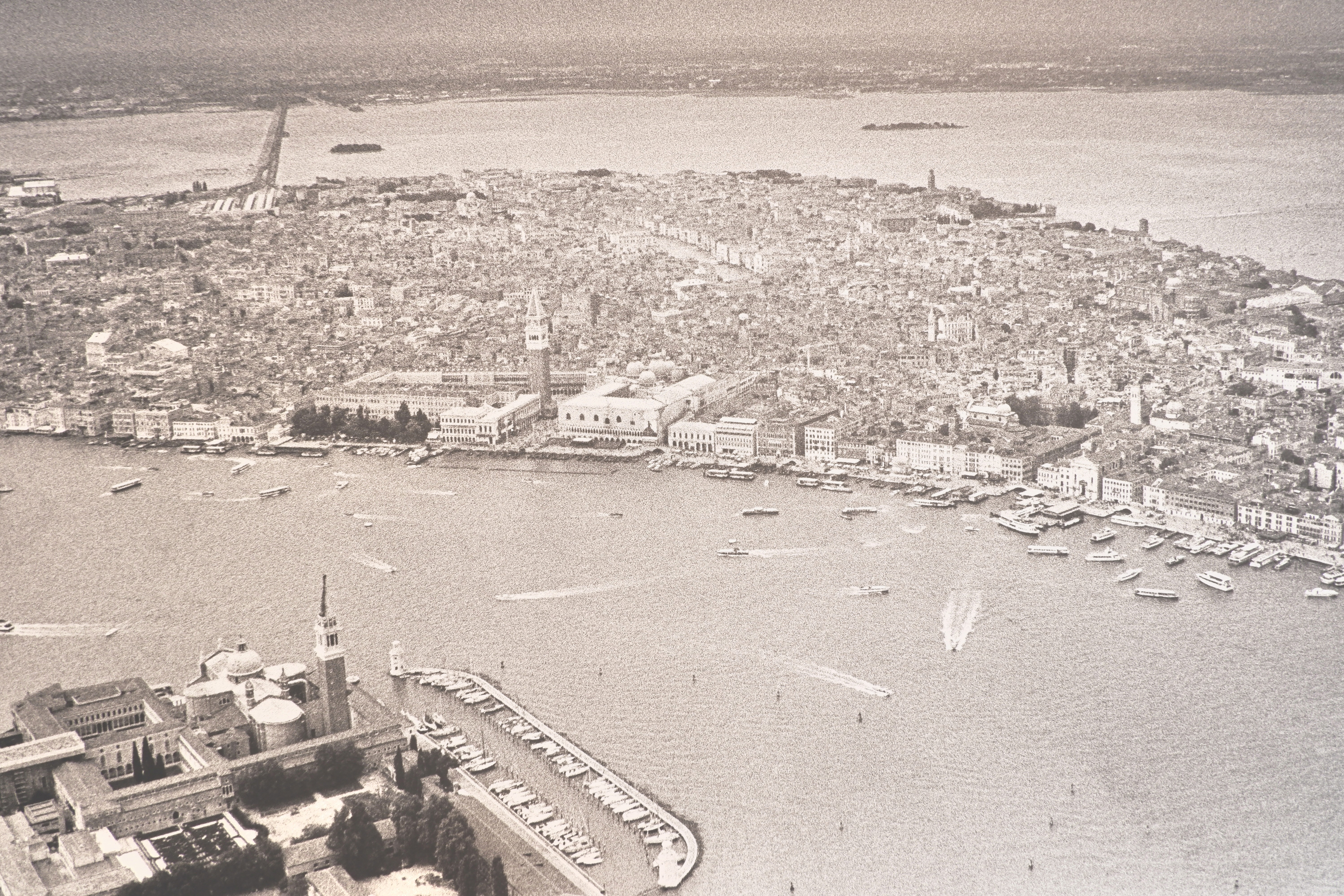
Uneven silhouettes of Venetian terracotta tiles are in conversation with the subdued white cube of Fondazione Wilmotte. Inside, the eight works by Renato D’Agostin are on display, drawn from his 2012 book titled The Beautiful Cliché.
Beauty is predetermined for Venice, the word “beautiful” itself is a cliché. Stepping into the gallery, I see the floating city as I experience it: distant, dissonant, unreal. This is the same Venice that has inspired centuries of art, yet whose beauty can feel notoriously intolerable. Brodsky describes the role of the body in Venice as a sole carrier of the eye; as if the eye is autonomous after three days in Venice. Venice is protective of those who inhabit it, just as its residents guard it with defensive care.
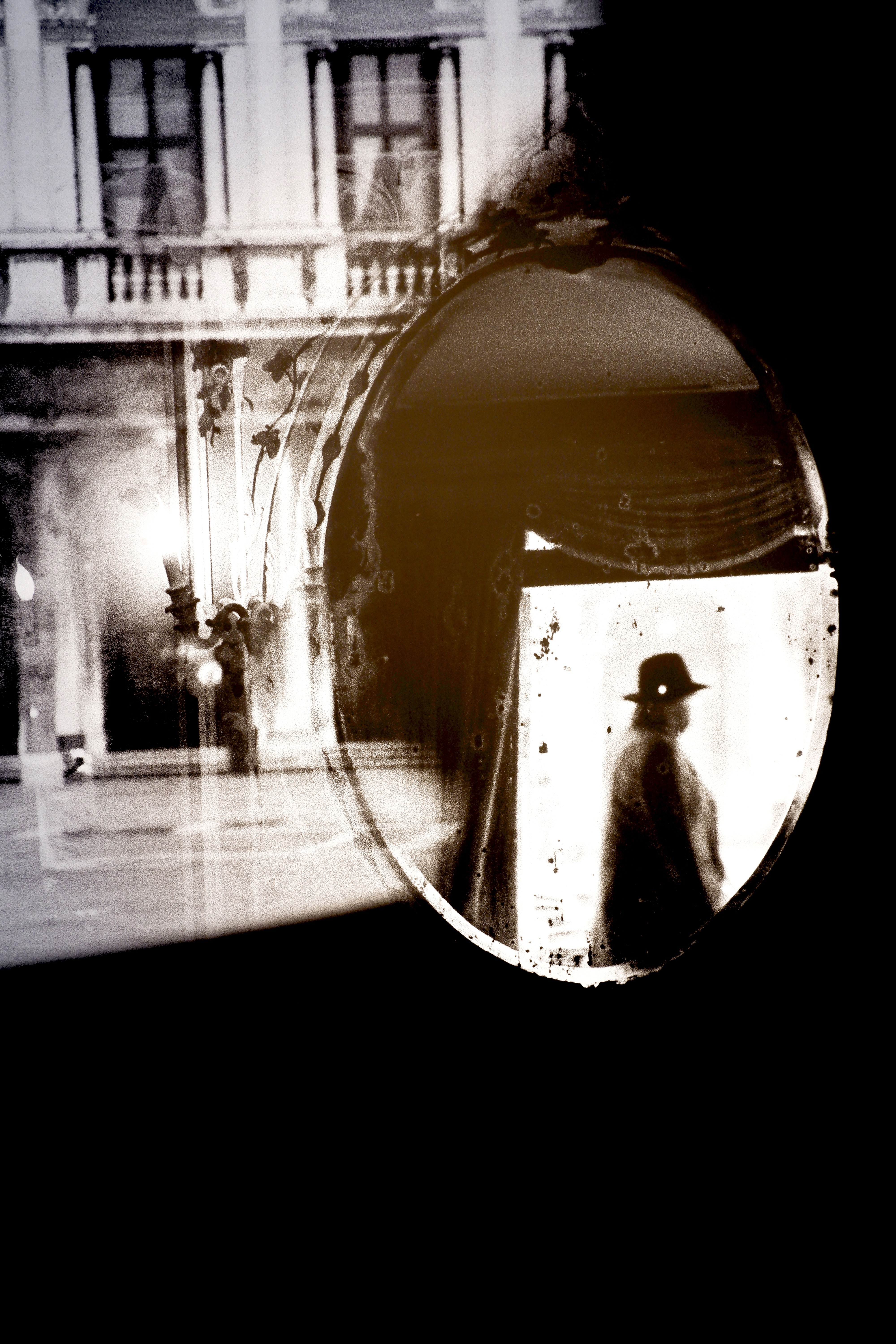
“You either get adopted by it or adapt to it,” says Renato D’Agostin. In his works, the city is revealed in close fragments, though the fragments are in haze. D’Agostin’s Venice is deliberately suspended. The viewer moves into the frame and locates among the faceless subjects as they nudge aside. The photographs in Le Flou de Venise are black-and-white gelatin silver prints made from photographic negatives. They are printed onto silver gelatin paper in the darkroom, with manual dodging and burning to control tonal contrast.
Uneven silhouettes of Venetian terracotta tiles are in conversation with the subdued white cube of Fondazione Wilmotte. Inside, the eight works by Renato D’Agostin are on display, drawn from his 2012 book titled The Beautiful Cliché.
Beauty is predetermined for Venice, the word “beautiful” itself is a cliché. Stepping into the gallery, I see the floating city as I experience it: distant, dissonant, unreal. This is the same Venice that has inspired centuries of art, yet whose beauty can feel notoriously intolerable. Brodsky describes the role of the body in Venice as a sole carrier of the eye; as if the eye is autonomous after three days in Venice. Venice is protective of those who inhabit it, just as its residents guard it with defensive care.
“You either get adopted by it or adapt to it,” says Renato D’Agostin. In his works, the city is revealed in close fragments, though the fragments are in haze. D’Agostin’s Venice is deliberately suspended. The viewer moves into the frame and locates among the faceless subjects as they nudge aside. The photographs in Le Flou de Venise are black-and-white gelatin silver prints made from photographic negatives. They are printed onto silver gelatin paper in the darkroom, with manual dodging and burning to control tonal contrast.
Venice teaches patience. The busiest time of the day, a dauntingly blasé vaporetto docks with a thudding noise, shakes awake the people who drifted off from the water gently rocking them to sleep. A mooring line so weary and stiff, gets thrown lazily onto the dock, gets wrapped with such mastered and precise choreography. Everyone is waiting. The vaporetto, with total nonchalance, has to make three to four yawning groans before it leisurely closes the gap between those on board and those waiting in queue to board.
The anticipation rises up but its slowness does not comply. People fidget and wait patiently, looking like champagne corks ready to pop at any moment.
During my first days of living in Venice, I recall how alien the notion of “the city of love” seemed. The city was having an affair with itself, in its vanity; while you as an outsider were left to observe its conceit. Day-by-day the city’s grandeur exposes the lack thereof in the mundanity of living in it.
Venetian canals are intrusive. They chase you, peeking through every wrong passage, waiting at the end of each mistaken turn, to remind you that you are indeed on an island.
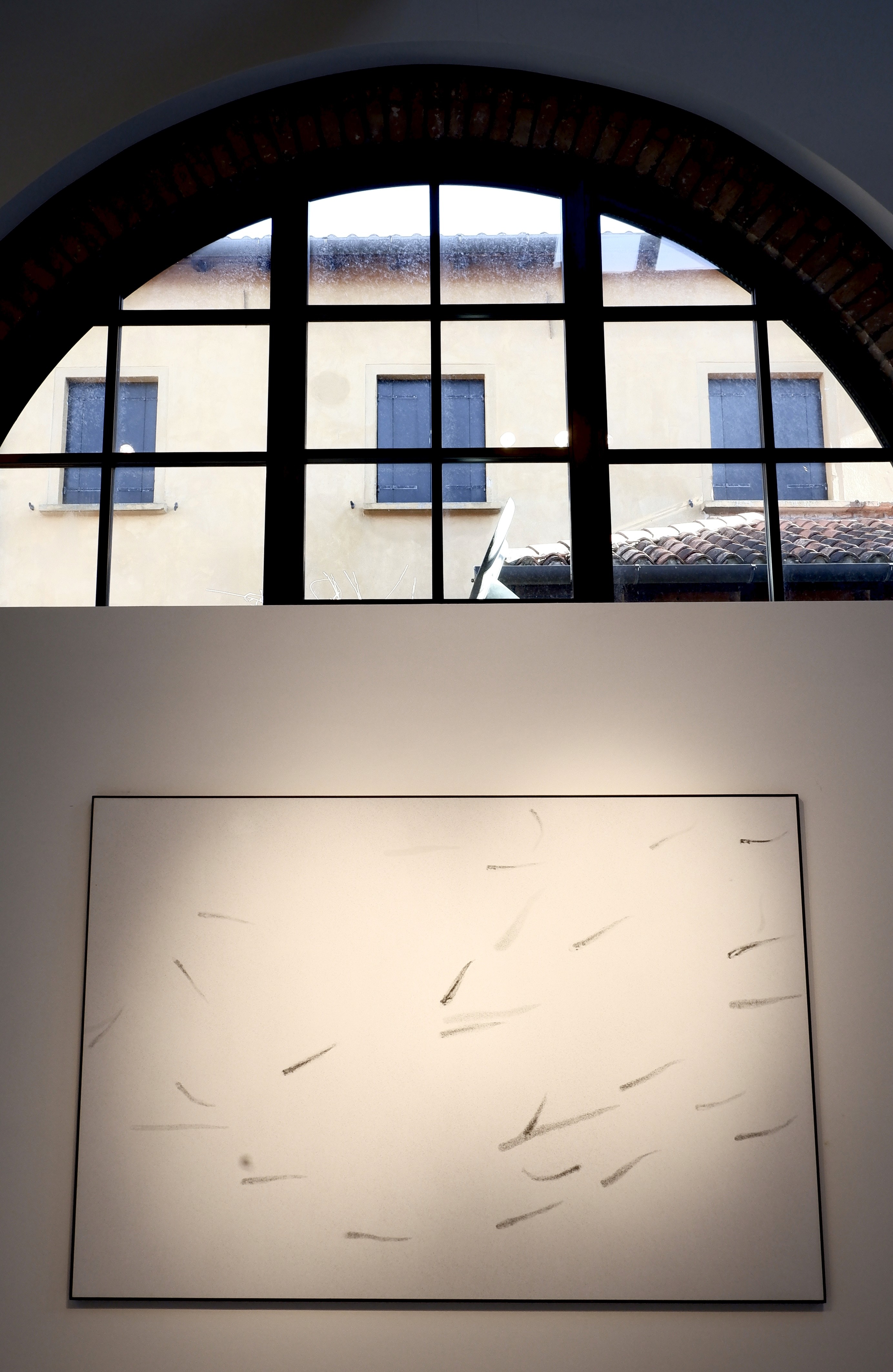
Each photograph, isolated in the white space, clearly shows Venice as it is: islanded. One of the most conspicuous images selected by Wilmotte (though initially opposed by D’Agostin) is the pond with fish. Vague strokes of grey are punctuated with the spines of fish, making them look like microbes under a microscope.
The eight images demand the same meditative approach as the city itself. Each photograph isolates a fragment of Venice, recreating it through warped memory: a small portion of the postcard city, a figure trapped in a mirror, or swallowed by inky blackness.
Venice teaches patience. The busiest time of the day, a dauntingly blasé vaporetto docks with a thudding noise, shakes awake the people who drifted off from the water gently rocking them to sleep. A mooring line so weary and stiff, gets thrown lazily onto the dock, gets wrapped with such mastered and precise choreography. Everyone is waiting. The vaporetto, with total nonchalance, has to make three to four yawning groans before it leisurely closes the gap between those on board and those waiting in queue to board.
The anticipation rises up but its slowness does not comply. People fidget and wait patiently, looking like champagne corks ready to pop at any moment.
During my first days of living in Venice, I recall how alien the notion of “the city of love” seemed. The city was having an affair with itself, in its vanity; while you as an outsider were left to observe its conceit. Day-by-day the city’s grandeur exposes the lack thereof in the mundanity of living in it.
Venetian canals are intrusive. They chase you, peeking through every wrong passage, waiting at the end of each mistaken turn, to remind you that you are indeed on an island.
Each photograph, isolated in the white space, clearly shows Venice as it is: islanded. One of the most conspicuous images selected by Wilmotte (though initially opposed by D’Agostin) is the pond with fish. Vague strokes of grey are punctuated with the spines of fish, making them look like microbes under a microscope.
The eight images demand the same meditative approach as the city itself. Each photograph isolates a fragment of Venice, recreating it through warped memory: a small portion of the postcard city, a figure trapped in a mirror, or swallowed by inky blackness.
Photograph by Gayane Abgaryan, courtesy of Renato D’Agostin
Photograph by Gayane Abgaryan, courtesy of Renato D’Agostin
Photograph by Gayane Abgaryan, courtesy of Renato D’Agostin
Photograph by Gayane Abgaryan, courtesy of Renato D’Agostin
Photograph by Gayane Abgaryan, courtesy of Renato D’Agostin
Photograph by Gayane Abgaryan, courtesy of Renato D’Agostin
© 2026 Acnarou. All rights reserved.
© 2026 Acnarou. All rights reserved.