INSEGUIRE L'INATTESO
The pursuit of the unexpected: Interview with Francesca Giubilei | Venice Art Factory
by Gayane Abgaryan
Feb. 2nd, 2026
by Gayane Abgaryan
Feb. 2nd, 2026
“Every work of art is the child of its age and, in many cases, the mother of our emotions.”
— Wassily Kandinsky, Concerning the Spiritual in Art
“Every work of art is the child of its age and, in many cases, the mother of our emotions.”
— Wassily Kandinsky, Concerning the Spiritual in Art
To see art is to feel its era. We live in a world of relentless pursuit of stability and control, which are barely rewarded or requited. It takes courage to release yourself from the claws of a predetermined outcome. In fact, getting curious about the unexpected; chasing the unknown instead of fearing it is a direct act of rebellion.
The balance between self-authority and surrender of total control is the core theme of the exhibition at SPARC* Venice. Francesca Giubilei, co-founder and co-curator of Venice Art Factory, explains how this philosophy shaped the exhibition: “The idea of Inseguire L'Inatteso [the exhibition] started with Stefano Cescon,” she says.
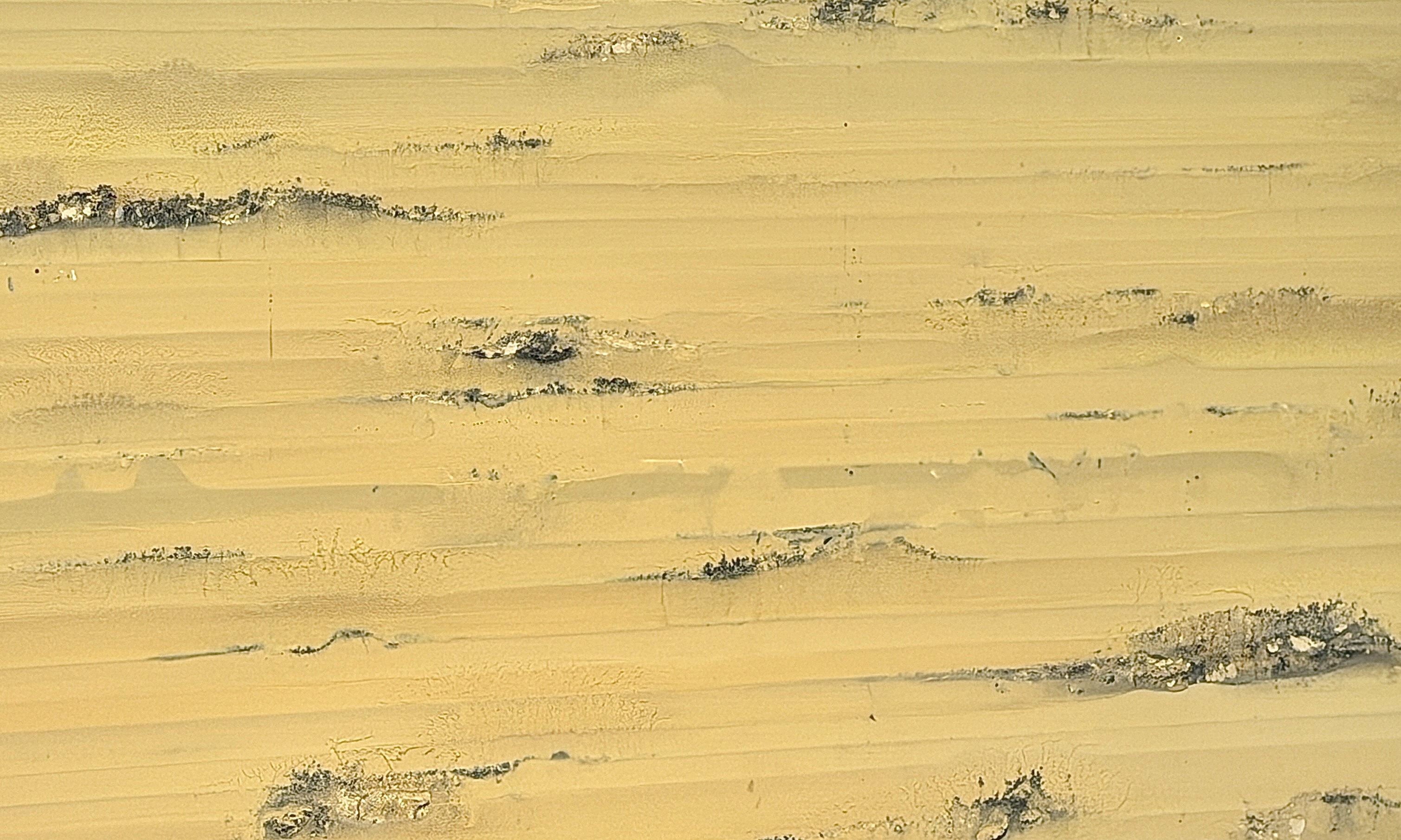
The concept of chasing the unknown was sparked by Cescon's willingness to use substances that might produce unexpected results on canvas, chemical interactions he could not entirely control. Then, Damiano Colombi, who welcomed an unexpected outcome by using wax and acrylic, and Alberto Scondro, who used silica, colors, and metals, united under a common idea of letting go. The artist’s job ends when the materials take over, the chemical synergy revealing the unexpected outcome instead.
For a young adult, Inseguire l'inttesto sounds like a dare to surrender obsessive strategizing. Almost like a call-to-action to stop the future-focused anxieties. Spectators love the relation between art and themselves; we situate ourselves in it. No matter how much context is given, our perception of art is limited. We read it through our own experiences, interpretation of beauty, and whatever we hold to be true. Francesca Giubilei, however, says that the initial intention was not to build a bridge between the current state of the world and the artworks, but rather to show that not all art is produced in the same way; sometimes it varies in composition, sometimes in technique.
“Even if the artists are not conscious of this, their practice somehow mirrors the current general attitude; the fact that nowadays it is very hard to predict the future, or to make decisions in the present that you know for sure will lead to a certain result,” she explains.
When asked how much curators expect viewers to actively engage with the work, and whether attention to materials matters as much as composition and color, Francesca Giubilei suggests that getting closer to the artwork requires effort from the viewer.
The experience of the visitor is just as much a part of the pursuit of the unknown as that of the artist and curator.
“I don’t want to facilitate the path too much for the visitors. First of all, it is not necessary to completely understand what the curator or the artist wanted to say—or even if they wanted to say something. I appreciate when a visitor comes and is simply amazed by colors or moved emotionally by the artworks without understanding. There are different levels of interpretation, and for me they are all equal. I’m happy when visitors find their own way to get in touch with the artwork.”
The artists collaborate with their work, but the curator takes the stage alongside them. Giubilei's ideal approach as a curator is to remain behind the scenes, mediate the dialogue between artists, and allow for freedom of expression. The curator’s role is, in many ways, a process of chasing the unexpected as well. Circumstances and chance dictate creative choices of the curators, similar to the concept of the exhibition. “When we put together two different pieces, we take into consideration many aspects; some poetic, some practical. Sometimes the room, the space, the distance; sometimes the colors, the shapes,” she explains.
Whether it's the artist yielding to materials, the curator to the show, the visitor discovering their own meaning, or society facing an uncertain future, the exhibition delves into the courage it takes to let go.
To see art is to feel its era. We live in a world of relentless pursuit of stability and control, which are barely rewarded or requited. It takes courage to release yourself from the claws of a predetermined outcome. In fact, getting curious about the unexpected; chasing the unknown instead of fearing it is a direct act of rebellion.
The balance between self-authority and surrender of total control is the core theme of the exhibition at SPARC* Venice. Francesca Giubilei, co-founder and co-curator of Venice Art Factory, explains how this philosophy shaped the exhibition: “The idea of Inseguire L'Inatteso [the exhibition] started with Stefano Cescon,” she says.
The concept of chasing the unknown was sparked by Cescon's willingness to use substances that might produce unexpected results on canvas, chemical interactions he could not entirely control. Then, Damiano Colombi, who welcomed an unexpected outcome by using wax and acrylic, and Alberto Scondro, who used silica, colors, and metals, united under a common idea of letting go. The artist’s job ends when the materials take over, the chemical synergy revealing the unexpected outcome instead.
For a young adult, Inseguire l'inttesto sounds like a dare to surrender obsessive strategizing. Almost like a call-to-action to stop the future-focused anxieties. Spectators love the relation between art and themselves; we situate ourselves in it. No matter how much context is given, our perception of art is limited. We read it through our own experiences, interpretation of beauty, and whatever we hold to be true. Francesca Giubilei, however, says that the initial intention was not to build a bridge between the current state of the world and the artworks, but rather to show that not all art is produced in the same way; sometimes it varies in composition, sometimes in technique.
“Even if the artists are not conscious of this, their practice somehow mirrors the current general attitude; the fact that nowadays it is very hard to predict the future, or to make decisions in the present that you know for sure will lead to a certain result,” she explains.
When asked how much curators expect viewers to actively engage with the work, and whether attention to materials matters as much as composition and color, Francesca Giubilei suggests that getting closer to the artwork requires effort from the viewer.
The experience of the visitor is just as much a part of the pursuit of the unknown as that of the artist and curator.
“I don’t want to facilitate the path too much for the visitors. First of all, it is not necessary to completely understand what the curator or the artist wanted to say—or even if they wanted to say something. I appreciate when a visitor comes and is simply amazed by colors or moved emotionally by the artworks without understanding. There are different levels of interpretation, and for me they are all equal. I’m happy when visitors find their own way to get in touch with the artwork.”
The artists collaborate with their work, but the curator takes the stage alongside them. Giubilei's ideal approach as a curator is to remain behind the scenes, mediate the dialogue between artists, and allow for freedom of expression. The curator’s role is, in many ways, a process of chasing the unexpected as well. Circumstances and chance dictate creative choices of the curators, similar to the concept of the exhibition. “When we put together two different pieces, we take into consideration many aspects; some poetic, some practical. Sometimes the room, the space, the distance; sometimes the colors, the shapes,” she explains.
Whether it's the artist yielding to materials, the curator to the show, the visitor discovering their own meaning, or society facing an uncertain future, the exhibition delves into the courage it takes to let go.
INSEGUIRE L'INNATESTO
The pursuit of the unexpected: Interview with Francesca Giubilei | Venice Art Factory
© 2026 Acnarou. All rights reserved.
© 2026 Acnarou. All rights reserved.